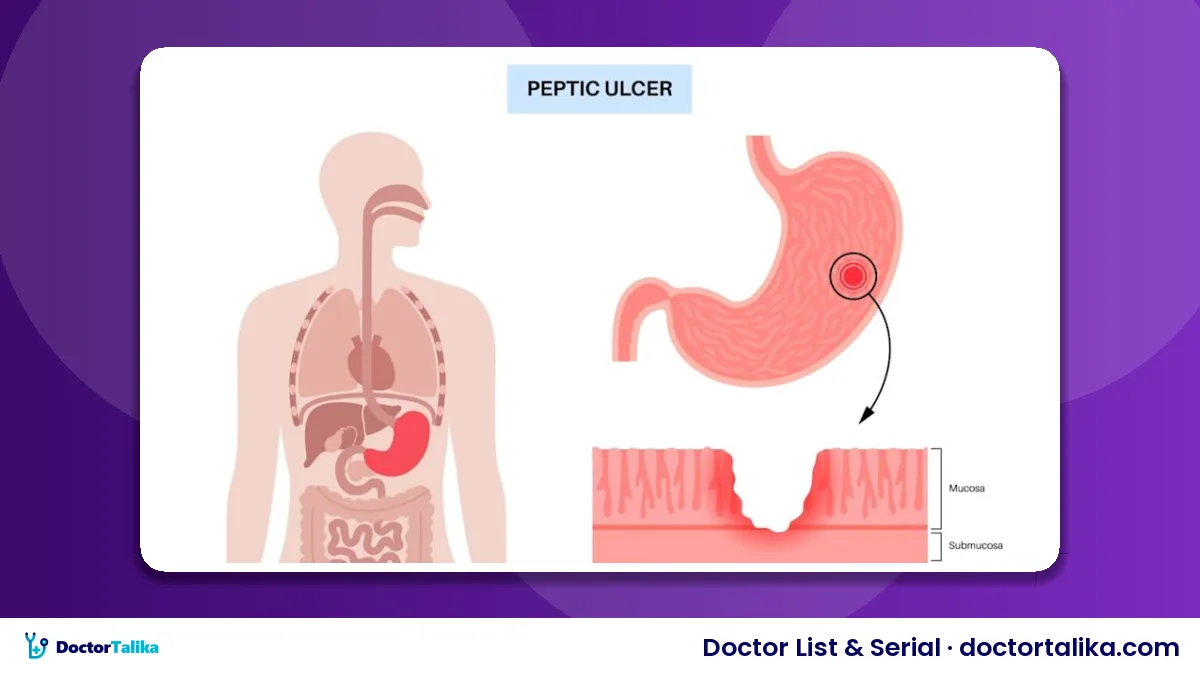
When stomach acid wears away the lining of the stomach, the small intestine or the esophagus, an open sore called a peptic ulcer can form. It may cause a range of unpleasant and at times serious problems. Some people notice nothing at first, while others have ongoing discomfort that deserves attention.
This guide explains peptic ulcer symptoms, what causes them, the complications they can lead to and the right time to see a doctor. It is useful whether you already have digestive trouble or simply want to learn more.
What Exactly Is a Peptic Ulcer?
The stomach and the duodenum (the first section of the small intestine) are protected by a mucous lining. When that lining is damaged, acid can eat into the tissue below and an ulcer forms. Peptic ulcers come in two main types:
- Gastric ulcers: found in the lining of the stomach.
- Duodenal ulcers: found in the upper small intestine.
What Causes Peptic Ulcers?
A number of factors can play a part:
- Helicobacter pylori (H. pylori) infection, a widespread bacterial infection that harms the stomach lining.
- Taking NSAIDs for a long time (nonsteroidal anti-inflammatory drugs), for example aspirin and ibuprofen.
- Drinking too much alcohol
- Smoking
- Stress, which does not directly cause ulcers but can make symptoms worse
- Spicy food, which can irritate an ulcer that is already there.
Typical Peptic Ulcer Symptoms
What you feel depends on where the ulcer is and how severe it is. These are the signs seen most often:
1. Burning Pain in the Stomach
This is the classic sign. You usually feel it somewhere between the navel and the breastbone, and it tends to appear:
- When the stomach is empty
- During the night
- In the gap between meals
Food or antacids may ease the pain for a while, but it often comes back.
2. Bloating
You might feel full after only a little food, or stay bloated for a long time.
3. Nausea or Vomiting
Nausea is common in people with peptic ulcers. When the ulcer is severe there can be vomiting, sometimes with blood that looks red or like coffee grounds.
4. Poor Appetite
Constant discomfort can take away the wish to eat, and this leads to losing weight.
5. Losing Weight
Weight loss you did not plan is a warning sign, more so when other ulcer symptoms are present too.
6. Black or Tarry Stools
Such stools may point to bleeding inside the body and need emergency medical care.
7. Pain in the Chest
Certain ulcers produce pain that feels like heartburn or can even resemble a heart attack.
Silent Ulcers Without Symptoms
Keep in mind that a peptic ulcer does not always cause symptoms you can notice. These “silent ulcers” are often found only during an endoscopy or once a complication such as bleeding appears.
When Should You See a Doctor?
Get medical help if you notice:
- Belly pain that is severe or does not go away
- Blood in your stool or vomit
- Trouble eating or keeping food down
- Weight loss with no clear reason
Any of these may mean a serious complication such as bleeding inside the body or perforation.
How Peptic Ulcers Are Diagnosed
To confirm a peptic ulcer, a doctor may order these tests:
- Endoscopy: a small camera shows the inside of the stomach and duodenum.
- H. pylori tests: done on breath, blood or stool, or on a biopsy taken during endoscopy.
- Barium swallow: X-ray pictures taken after you drink a contrast liquid.
Finding an ulcer early helps avoid complications and makes treatment work better.
How Ulcers Are Treated
1. Medicines
- Antibiotics that clear the H. pylori bacteria
- Proton pump inhibitors (PPIs) that lower stomach acid
- H2-receptor blockers
- Antacids
- Cytoprotective agents that shield the stomach lining
2. Changes to Daily Habits
- Stay away from NSAIDs
- Give up smoking
- Cut down on alcohol
- Follow a balanced diet that does not irritate the stomach
3. Surgery (rarely needed)
An operation may be necessary when there are serious complications such as obstruction, perforation or an ulcer that will not heal.
What Happens If a Peptic Ulcer Is Not Treated
Without treatment, a peptic ulcer may cause:
- Bleeding inside the body
- Perforation, meaning a hole in the stomach wall
- Gastric outlet obstruction
- A higher chance of stomach cancer, particularly with long-term H. pylori infection
This is why getting diagnosed on time and seeing an expert matters so much.
See the Best Gastroenterologist in Dhaka
If you have signs of a peptic ulcer, have a qualified specialist check you. The right diagnosis and treatment plan can head off complications and bring lasting relief. For expert care, including accurate diagnosis, endoscopy and treatment tailored to you, visit the best gastroenterologist in Dhaka.
They have wide experience treating difficult digestive conditions, including ulcers caused by medicines, H. pylori or lifestyle habits.
Final Thoughts
Peptic ulcers are common, yet they can turn serious and need medical care in good time. Symptoms range from a little discomfort to strong pain and bleeding. Spotting the warning signs early and getting treated can make a big difference to your health.

Doctor Talika (ডাক্তার তালিকা) বাংলাদেশের বিশেষজ্ঞ ডাক্তার, হাসপাতাল ও ডায়াগনস্টিক সেন্টারের তথ্য এক জায়গায় তুলে ধরে। আমাদের লেখা শুধু সাধারণ স্বাস্থ্য সচেতনতার জন্য — চিকিৎসার সিদ্ধান্ত নিতে অবশ্যই রেজিস্টার্ড ডাক্তারের পরামর্শ নিন।