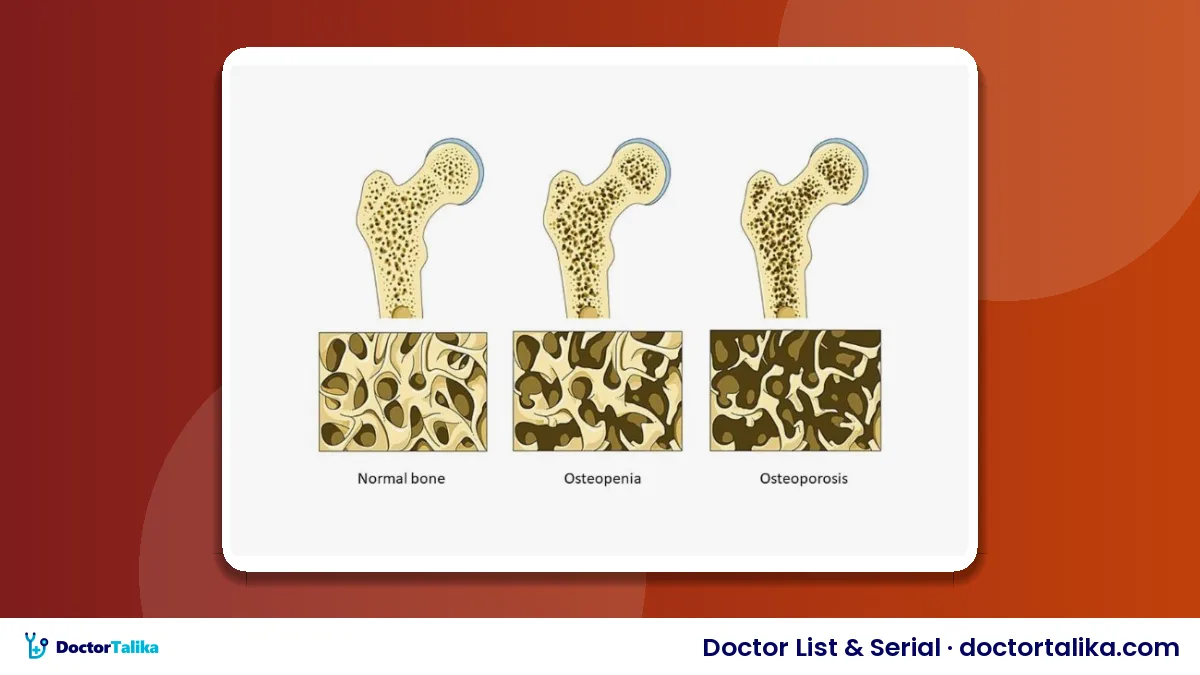
People often refer to osteoporosis as the “silent disease”, because it can keep getting worse without causing any symptoms until a bone breaks. It is a big public health problem that affects millions of people across the world, older adults most of all. So what is osteoporosis, how does it develop, who is likely to get it, and how can it be prevented or treated?
This in-depth guide covers all the essentials of osteoporosis: why it happens, its symptoms, how it is diagnosed, how it is treated and how to prevent it. If you are worried about your own bone health or that of someone close to you, an Orthopedic Doctor can give you expert advice and care suited to your situation.
Osteoporosis Explained
Osteoporosis is a condition in which bones lose strength, turn fragile and break more easily. The name “osteoporosis” literally means “porous bone”, pointing to the drop in bone density and quality that the disease causes.
Bone is living tissue. Through a process known as remodeling, it is broken down and rebuilt all the time. Osteoporosis sets in when new bone is made more slowly than old bone is removed, and this imbalance leaves bones thinner, less dense and weaker in structure.
Why Do People Call It the Silent Disease?
It earns the name silent largely because you can't feel your bones getting weaker. In the early stages there are generally no symptoms at all. Plenty of people find out they have osteoporosis only after a bone breaks from a small fall or even from everyday actions such as coughing or bending down.
Places where osteoporosis-related fractures happen most often:
- Hip
- Spine (vertebrae)
- Wrist
- Pelvis
Such fractures may cause long-term pain, disability and loss of independence, and in some cases complications that put life at risk.
What Causes Osteoporosis and Who Is at Risk
Bone mass reaches its highest level at about age 30 and then slowly starts to fall. Osteoporosis appears when bone is lost faster or built more slowly than normal. A number of factors feed into this imbalance:
1. Getting Older
Age is the biggest risk factor of all. Over the years bones lose calcium and other minerals, which leaves them more brittle.
2. Being Female
Women face a greater risk, particularly after menopause, when levels of estrogen—a hormone that helps protect bone density—go down.
3. Family Background
Your risk rises if relatives have had osteoporosis or fractures.
4. Poor Nutrition
Bones become weaker when the diet doesn't supply enough calcium and vitamin D.
5. Inactive Lifestyle
Not moving enough weakens both muscles and bones, which makes fractures more likely.
6. Health Conditions and Medicines
Some illnesses, such as thyroid disorders and rheumatoid arthritis, as well as taking corticosteroids for a long time, can play a part in osteoporosis.
7. Smoking and Heavy Drinking
Both habits harm the health of your bones.
Signs and Symptoms of Osteoporosis
As noted earlier, there are often no warning signs at first. Once bones are fragile enough, though, you may notice:
- Breaking a bone from a small injury: for example a fall or a sudden knock.
- Pain in the back: from vertebrae that have broken or collapsed.
- Becoming shorter over time: because of compression fractures in the spine.
- A stooped posture or kyphosis: the back looks rounded or hunched.
Should any of these happen, get a medical check-up quickly.
Diagnosing Osteoporosis
Doctors usually rely on:
- Bone Mineral Density (BMD) Test: The DEXA scan (dual-energy X-ray absorptiometry) is the most widely used. It checks bone density at the spine and hip and shows how likely a fracture is.
- Medical History and Physical Exam: These help identify symptoms and risk factors.
- Laboratory Tests: These rule out other reasons for bone loss.
Catching it early is essential for good control.
Treating and Managing Osteoporosis
Osteoporosis can't be cured completely, but good management lowers the chance of fractures and helps you keep a good quality of life. Treatment generally involves:
1. Medicines
- Bisphosphonates: slow down bone loss and cut the number of fractures.
- Selective Estrogen Receptor Modulators (SERMs)
- Hormone Replacement Therapy (HRT) (for some patients)
- Denosumab and other newer medicines
2. Changes to Daily Life
- Getting enough Calcium and Vitamin D: vital for healthy bones.
- Weight-bearing Exercise done regularly: walking, jogging or resistance training, for example.
- Preventing Falls: making the home safer and practising balance.
- Quitting Smoking and Cutting Down on Alcohol
Why a Specialist Matters
Managing osteoporosis can be complicated, since it involves judging risk, planning treatment and keeping track of progress. An experienced orthopedic doctor brings knowledge that is extremely valuable here.
If you think you may have osteoporosis, or simply want to check your bone health early, make sure you see the best Orthopedic Doctor. They can take you through the diagnosis, suggest treatments that work and help you adopt lifestyle changes that protect your bones.
Keeping Bones Strong: Osteoporosis Prevention Tips
- Follow a balanced diet with plenty of calcium (dairy, leafy greens, fortified foods).
- Make sure you get enough vitamin D (sunlight, plus supplements when needed).
- Stay physically active on a regular basis.
- Don't smoke, and keep alcohol to a minimum.
- Keep your weight in a healthy range.
- Have regular health check-ups, particularly if you have risk factors.
In Conclusion
Osteoporosis might not make a sound, but what it leads to is serious. Being aware, finding it early and managing it properly are what keep your bones healthy and strong for life.
There's no need to wait for a broken bone before acting. See an Orthopedic Doctor now to have your bone health checked and start taking steps to prevent osteoporosis.

Doctor Talika (ডাক্তার তালিকা) বাংলাদেশের বিশেষজ্ঞ ডাক্তার, হাসপাতাল ও ডায়াগনস্টিক সেন্টারের তথ্য এক জায়গায় তুলে ধরে। আমাদের লেখা শুধু সাধারণ স্বাস্থ্য সচেতনতার জন্য — চিকিৎসার সিদ্ধান্ত নিতে অবশ্যই রেজিস্টার্ড ডাক্তারের পরামর্শ নিন।